
U.S. Motorcycle Shipping Statistics & Trends 2025
Shipping motorcycles has become an essential service for riders, collectors, and dealers across the United States. Driven by relocations, online sales, and seasonal events, demand for professional motorcycle transport is steadily rising. This 2025 report pulls together verified data on costs, routes, shipping methods, and industry trends.
How Many Motorcycles Are Shipped Each Year?
Motorcycle transport has quietly grown into a major logistics sector. Post-pandemic relocations, booming used-bike sales, and nationwide rallies all contribute to record shipping volumes.
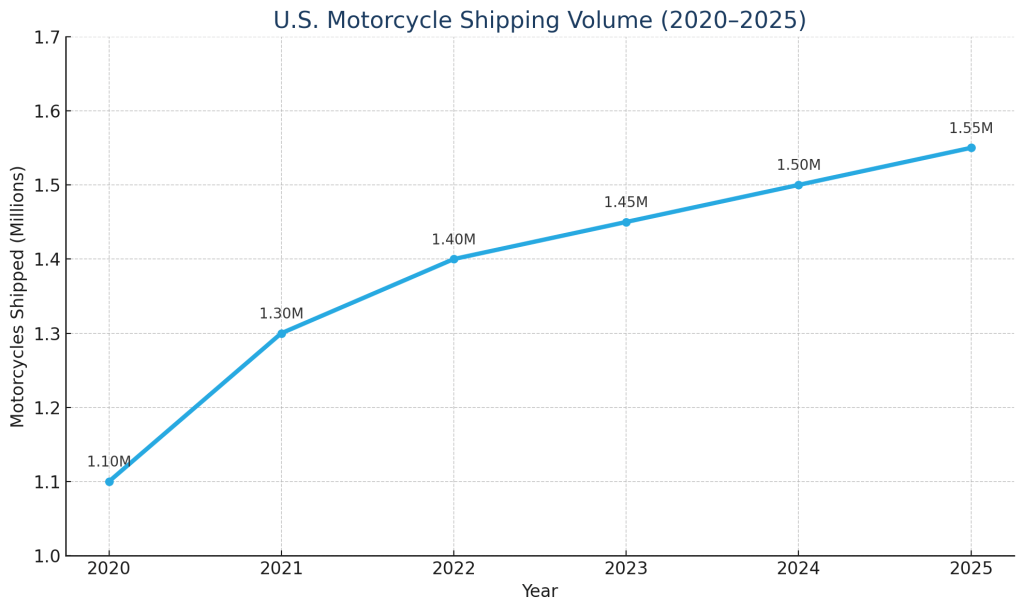
- Over 1.5 million motorcycles
are shipped annually across the U.S. as of 2024–2025.
- Over 1.5 million motorcycles
- Some carriers saw a 35% surge in demand
in 2021 compared to 2020, and that momentum has held steady.
- Some carriers saw a 35% surge in demand
- In shipping hubs like McAllen, TX, shipments rose 20% year over year
, showing strong regional growth.
- In shipping hubs like McAllen, TX, shipments rose 20% year over year
How Much Does It Cost to Ship a Motorcycle?
The cost to ship a motorcycle depends on distance, season, and whether you choose enclosed or open transport.
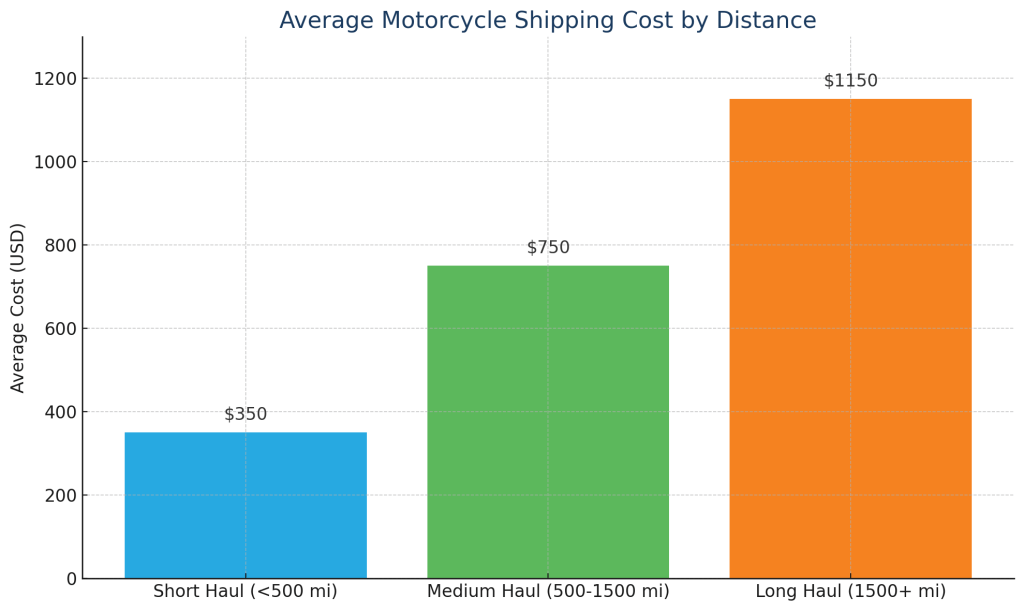
- The average shipping cost is around $940 for a standard domestic move.
- Short trips under 500 miles average $200–$500, while coast-to-coast shipping costs $900–$1,300.
- Summer is peak season, meaning higher rates, while off-season winter shipments can be 10–20% cheaper.
Enclosed vs. Open Transport
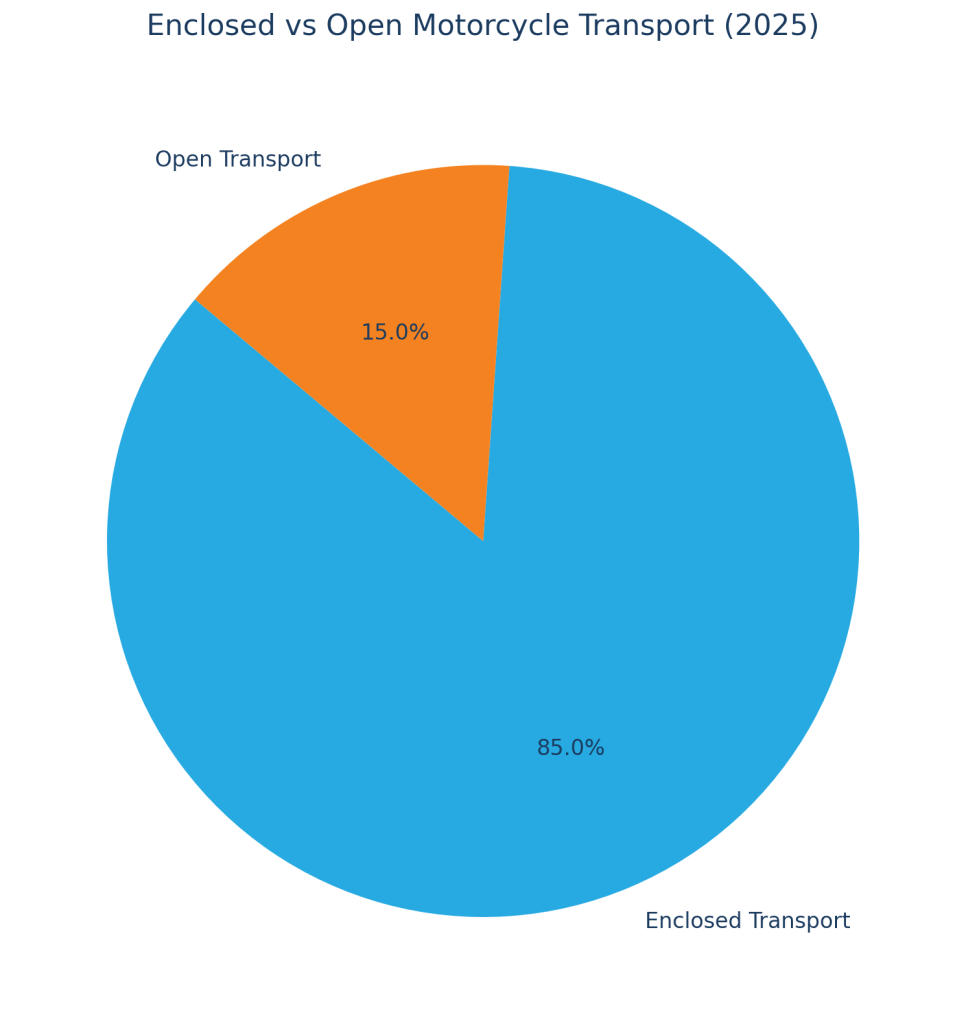
Most motorcycles travel in enclosed trailers for maximum protection from weather, theft, and road debris.
- 85% of shipments are enclosed transport, the safest and most popular option.
- 15% are shipped on open carriers, typically for short hauls or budget shipments.
- Enclosed shipping costs 30–50% more but is standard for high-value or collectible bikes.
Top Motorcycle Shipping Routes
Motorcycle shipments are concentrated on certain high-volume routes, especially between states with strong riding cultures.
- California to Florida is one of the busiest motorcycle shipping corridors in the U.S.
- Other major lanes include California–Texas,Florida–New York, and California–New York.
- Seasonal “snowbird” moves send thousands of bikes from the Midwest and Northeast to Florida and Arizona.
Seasonal Shipping Patterns
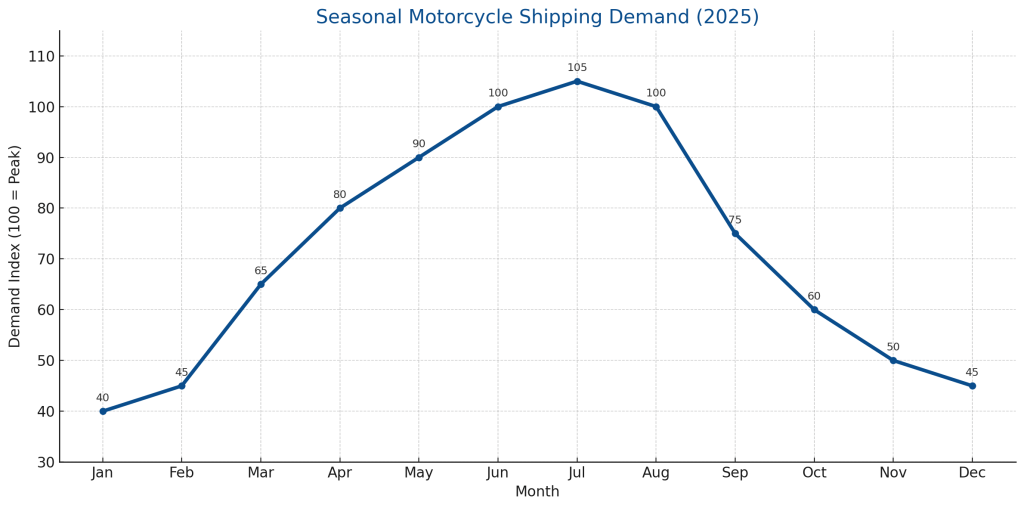
Shipping demand rises and falls throughout the year, following the riding season and major rallies.
- Spring brings a shipping surge as bikes leave storage for the season.
- Summer is the busiest period, especially in July and August during major rallies like Sturgis.
- Winter is the slowest — and cheapest — time to ship, with more carrier availability.
Damage Rates and Insurance Coverage
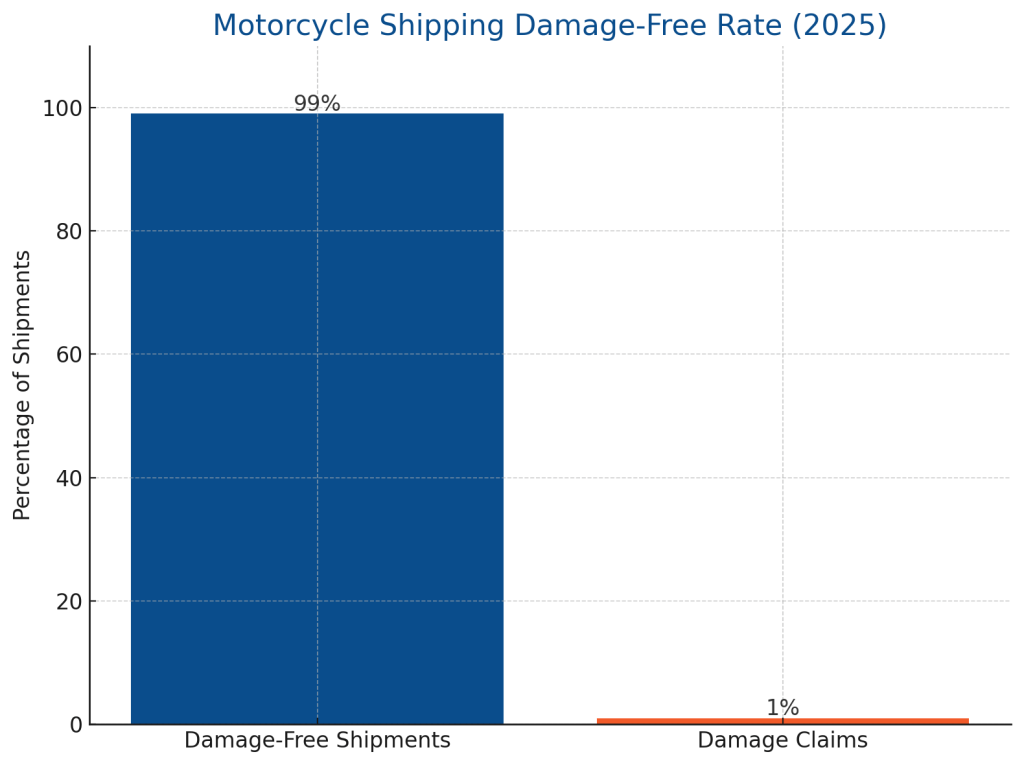
Professional shippers have a strong safety record, and nearly all shipments arrive without issues.
- Over 98–99% of bikes are delivered without damage.
- The damage claim rate is only about 1–2%, usually for minor scratches.
- Most carriers include $5,000–$7,000 of insurance in the base price, with more available for high-value bikes.
The Rise of Electric Motorcycle Shipping
As electric motorcycles grow in popularity, they are starting to influence the shipping industry.
- The global electric motorcycle market is expanding 15.5% annually and will reach $115 billion by 2033.
- Shipping companies are adjusting to transport electric bikes, including handling lithium batteries safely.
- Some carriers now promote eco-friendly practices, like using fuel-efficient trucks or carbon offset programs.
How Are Motorcycles Shipped?
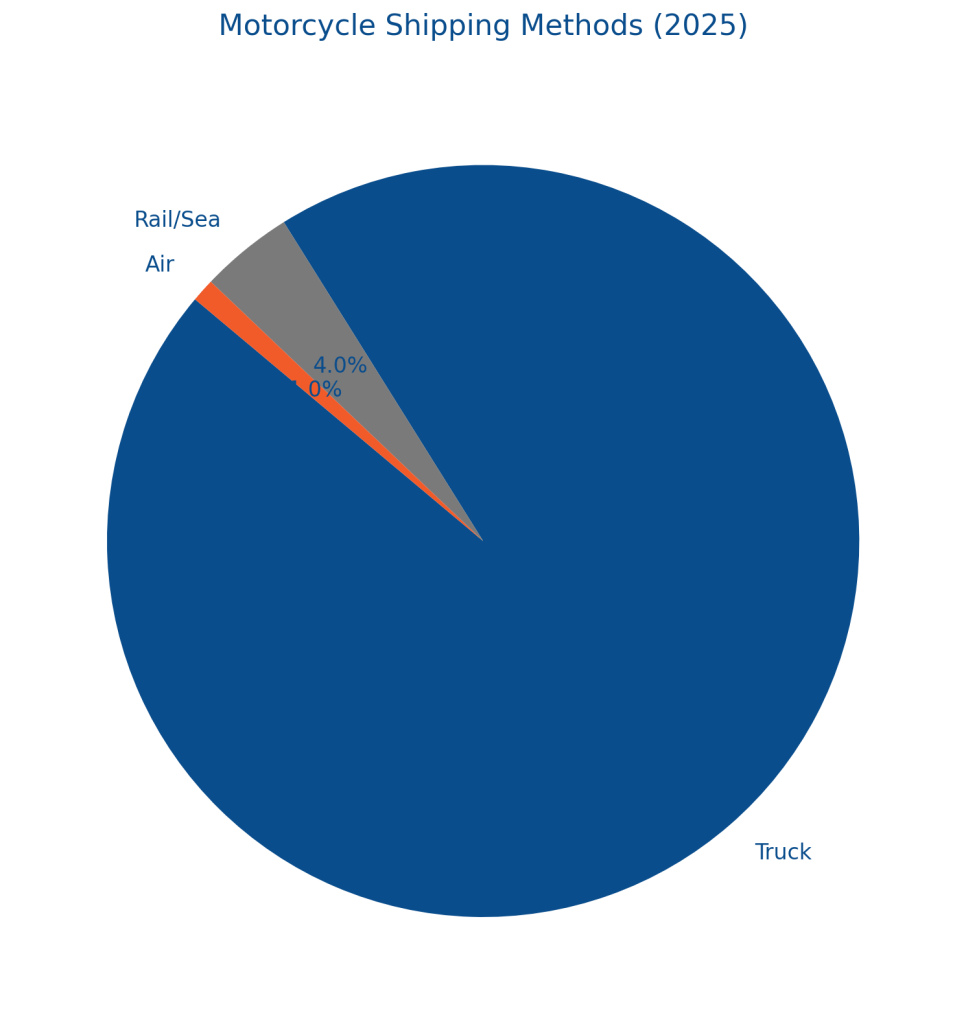
Almost every motorcycle shipped in the U.S. travels by truck, but other methods play a small role.
- About 95% of shipments are by truck, using enclosed trailers or flatbeds.
- Rail and sea freight are used for multi-bike loads or for Hawaii and Alaska moves.
- Air freight is rare (<1%), used for urgent shipments or racing bikes.
Online Motorcycle Sales and Shipping Demand
Online sales are fueling long-distance motorcycle shipping like never before.
- Platforms like Cycle Trader and Bring-a-Trailer generate thousands of out-of-state sales.
- Shipping is often cheaper than flying and riding the bike home (a Los Angeles–D.C. trip costs $534 to ship vs $800 to ride).
- Dealers and auction houses increasingly advertise “nationwide delivery” as a selling point.
Consumer vs. Business Shipments
Motorcycle shipping serves both individuals and businesses, often in the same truck.
- Consumers account for the majority of shipments (relocations, online purchases).
- Businesses — including dealers and auction houses — ship bikes in batches.
- Carriers often mix both to keep routes efficient and costs competitive.
Motorcycle Shipping and the Economy
The shipping industry reflects broader trends in motorcycle sales and ownership.
- New motorcycle sales dipped about 6% in 2024, but used sales remained strong.
- The U.S. motorcycle industry is worth $48 billion, and thousands of dealerships rely on shipping.
- Stable shipping demand shows that moving bikes has become part of the ownership experience.
Motorcycle shipping has become mainstream, not a niche service. More bikes are being moved every year, driven by online buying, relocations, and seasonal trends. Enclosed trailers dominate, insurance claims are rare, and the rise of electric motorcycles will shape the future. With more eco-friendly fleets, better tech, and nationwide coverage, motorcycle shipping is becoming as routine as shipping a car, and in 2025, it is an industry every rider can rely on.